Showing posts with label Turkey. Show all posts

Global Post: Turkish Brothels

Photo © Nicholas Dynan-All Rights Reserved

One of my favorite online news provider is Global Post, not only for its cutting edge news reporting and analysis, but also for its frequent "off-the-beaten-path" features such as the one of Turkish transsexual brothels by Nicholas Dynan.

It also periodically publishes Full Frame which features photo essays and conversations with photographers in the field (including myself).

The Turkish transsexual brothels which, we are told, can be located in the busiest streets of Istanbul, and are the work place of some of Istanbul's transgender and transsexual sex workers.

To the best of my recollection, only one attendee of the Foundry Photojournalism Workshop in Istanbul last June presented work relating to transgender issues. Pedro Gomes, who attended my multimedia class, produced Esmeray, an audio slideshow about a transgender feminist-sex worker-actor.

Mervyn Leong: Hammams, Spreader of Warmth


Here's a lovely audio-slideshow by the gifted Mervyn Leong W.Y. which you can either view on Vimeo (click above) or via his website here. The quality of the latter is better.

Mervyn attended the Foundry Photojournalism Workshop in Istanbul (he also attended last year's in Manali), and participated in Rena Effendi's Telling A Human Story Through A Compelling Portrait class. I spent time with Mervyn as he prepared to photograph inside the less-than-hospitable-for-photography interiors of the hammams, and can vouch for his meticulous planning, and how he took pains to wrap his camera, lenses and audio gear in saran-wrap (to protect them against moisture and steam).

An engineer by profession, Mervyn took photography and photojournalism more seriously a couple of years ago, and has made impressive strides in his work. He's also endowed with an encyclopedic knowledge of gastronomy, cooking and food in general.

I think that Hammams: Spreader of Warmth is a very well made audio slideshow (I particularly like the opening image of the slideshow, which is almost a painting), and the audio tracks are well sync'ed. You'll find it a delight to watch...and like the patrons enjoying the turkish bath, you may feel equally relaxed and refreshed.

The hamams in the Ottoman culture started out as annexes to mosques, and quickly evolved into institutions and eventually into monumental structural complexes in the mid 1500s. Typical hamams consist of three interconnected rooms: the sıcaklık which is the hot room; the warm room which is the intermediate room; and the soğukluk, which is the cool room.

Mugur Vărzariu: Pillars of Faith

Photo © Mugur Vărzariu-All Rights Reserved

Photo © Mugur Vărzariu-All Rights Reserved

Photo © Mugur Vărzariu-All Rights Reserved

Mugur Vărzariu is a photojournalist based in Romania who attended the Foundry Photojournalism Workshop in Istanbul, and was in Adriana Zehbrauskas' On Assignment class.

It's a testament to Mugur's intrinsic talent that he started as a photographer less than four months ago. Yes, you read that right...less than 4 months ago, and he also just won the ‘Leica for AICR’ People Photo Contest, where one can read his interview.

He tells us that his first choice for a photojournalism project was to document faith, and to stress through his imagery that, despite the difference in the names or sites of worship, people’s faith is the same. Largely self-taught, he also attended a workshop in Italy with Paolo Pellegrin.

Mugur graduated in economics, and worked in marketing strategy (or brand positioning) for 15 years, when he helped position hundreds of brands. This, he believes, has helped him position his own craft...and from what I've seen from his work at the Foundry and on his website, he has succeeded.

I predict we'll hear and see more of Mugur Vărzariu. Have a look at his website, and you'll agree with me. The above images are from his Pillars of Faith gallery.

Discovering Puduhepa And Nefertari

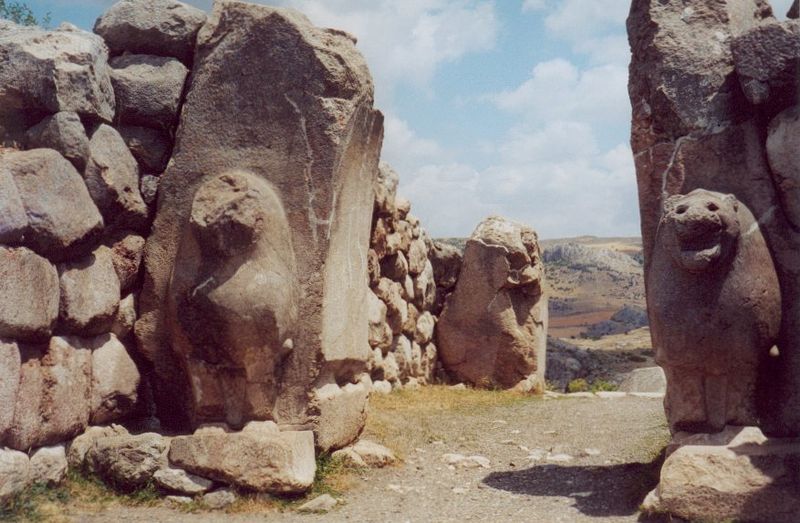
ПраздникWishing you all the best in the new year, I want to tell about an interesting place to visit "before you die" as suggest the widget for travellers. This place is connected with the feasts because I tell you about the capital of a very powerful kingdom mentioned in the Bible. I tell you about hittites and their capital Hattusa.

If you read the romance about Ramesses II and his battle against the hittits (near Qadesh 1274 BC) -you understand, what are we telling about here. So, the place to visit is in Turkey.

There are special tours when you can visit all the places connected with the history of hittites Empire. GAZIANTEP - URFA - ADIYAMAN-NEMRUT - ANTIOCHIA -MERSIN - SILIFKE - KONYA -CAPPADOCIA - HATTUSAS (photo Wikipedia)

As for me, I was very interested to listen (in un documentary) the story about Hattusili III, his wife Puduhepa and HER relations with the wife of Ramessese, Nefertari. The women of that period were so independant that did not need femminism else...
Mmmm? I awoke your interest?

Our latest travel writing: in print and online

As I don't have time to blog at the moment (read why here), feel free to check out our latest writing in print and online. This month in J Mag, Jazeera Airways' in-flight magazine, you can read about walking tours with shepherds, learning to make traditional bread with a village baker, and some of the other rustic activities being offered by Northern Cyprus' first eco-village in our story 'Village People' (online version here). The same issue also features 'Where to Stay: Antalya', my overview of the best hotels in one of Turkey's most agreeable cities. We spent just over two and a half months in Turkey last year writing, including six weeks in Antalya last year renting an apartment in a restored Ottoman house in the old city. The Northern Cyprus story was researched during a trip to Cyprus (we flew to Antalya from Northern Cyprus) to update a few books and write a first edition Cyprus guide for AA Publishing. Online, you can take a look at our piece on Adelaide: Australia's most underrated city, on Viator, which is one of our final posts on a series we wrote while Down Under working on books and stories: see the full series here. The pic? That's the idyllic setting for the walks with the local shepherd that we write about in the Northern Cyprus story. Tempted?

About People In Turkey

анталья
«анталья» на Яндекс.Фотках

The photos you see here are all from Antalya, a city situated in Turkey. I heard about it the first time just some minutes ago and wanted to investigate a little about this interesting place.

As you see on the photos, it has not only beautiful nature but very ancient history that remembers Romans and Greeks (in fact, it's name is Greek). It was part of different Empires and states and every culture leaved there it's buildings and habits. It's very interesting.

One of my friends went to visit Turkey many many years ago, when the tourists were not too common all over the world. She came there with her husband that was a sailor. So, when they were in the ports of Turkey and worked there she had time to visit the cities. She spoke english and franch only and did not know any word in Turkish. And imagine, she left her way.

She told me, one seller from a little shop, where she entered to ask where to go, not only explained her what to do -even if he did not know to speak any language she spoke!- he asked her to rest a minute and offered her a cup of tea with bisquits and other turkish sweet specialities.

She was so delighted by the behaviour of that man! She said, she has never seen such a person and hospitality in all her life.

Римская арка в Анталье
«Римская арка в Анталье» на Яндекс.Фотках

Водопад
«Водопад» на Яндекс.Фотках

Jewish Culture Day in Turkey

The European Day of Jewish Culture took place Sept. 7, and reports are coming in about how events were celebrated around the continent. Turnout appears to have been high in many places.

The Turkish Daily News reports from Istanbul:

Tünel's music store-lined streets are rarely quiet. But walking through the area Sunday, one could hear some very unfamiliar sounds, from a klezmer, to a maftirim choir, to Hebrew love poetry for the land of Israel.This was less an invasion than a return. For this year's European Day of Jewish Culture, a celebration of Jewish traditions held in cities across Europe, became for Istanbul's Jews a re-creation of a time when they were a vital, even dominant, part of the area, and when it would not have been unusual in the Galata area to be guided from synagogue to synagogue by Hebrew chants.

READ FULL STORY

Antalya, Turkey: silhouettes and beers at sunset

I can't get enough of the sunsets in Antalya. Early evening, an hour or so before the sun goes down, we wander down to the old harbour, a ten minute walk from the house we're renting. During the day Terry and I are so focused on work, that apart from our coffee and lunch breaks, our bend-and-stretch moments, and our breaks to play with the kittens (when we arrived four weeks ago we were asked to babysit a cat and her four newborn kittens; the offer was too good to refuse), we rarely speak and our eyes barely leave our laptop screens. Once upon a time when I worked a full-time job my staff used to call me a robot. Now I freelance I'm the same. Terry's no different. We could be working in separate offices, for separate companies. It's like this when we're in write-up mode. So we use our walks to catch up on the day's 'events'. We ignore the touts wanting to sell us carpets, postcards and tacky souvenirs. Especially the guy in the fez who is always posing for a picture with sunburnt German tourists. And we ignore the guys inviting us to sit down in their restaurants for dinner (at 6pm!), to have a beer, to take a boat tour. And we especially ignore the guys in silly velvet costumes yelling out "Hello! Ice-cream!". Today we look at each other and laugh. It sounds as if they're saying hello to their ice creams. Do these calls ever get people in? Is it not enough to display the ice-cream and for tourists to see it and think "Mmm... ice-cream... that looks good, I might have an ice cream..." Do we need to be shouted at? The touts in Turkey are bugging us more than ever before. They should know we're 'locals' by now, I think. Terry and I use our walks to brief each other on emails received, work opportunities and offers, commissions underway, progress made in trip planning, and new project ideas. We always seem to have new project ideas. This is part of our problem. We're never satisfied. We always want more. We take on too much. And we chat about the travel news and world news and emails from family and friends. And then we enjoy the sunset. With the locals. Who walk along the concrete breakwater and back again. Who canoodle on the rocks. Play with their kids. Read newspapers. Paint their boats. Fix their fishing nets. Buy hot nuts. Eat hot nuts. Play guitar. Drink beers. They always drink beers. They really seem to like their beer here, especially the local brand Efes. Once the sun is so low that the people are only silhouettes, we snap a few pics and go 'home'. Back to work. And then I'm reminded that no matter how much we're living like locals, we're not locals. If we were locals, we'd still be down at the harbour drinking beers.

Living like locals

Two months ago we arrived in Antalya, Turkey, from Crete via Northern Cyprus. We weren't in Turkey to research or write about Turkey. We were here to hole up at our friends' villa in Kas and use it as a base for a month to write up the Crete and Cyprus books, write a tonne of travel stories for magazines, and plan our next trips. When it was time to leave Kas, we still had more to do, and more work had come in, so we returned to Antalya and rented an apartment for another month. It's a rooftop apartment in a renovated Ottoman house in the old town and we've been here writing, and living like locals. In some ways, it's a relief to not have the pressure of being a parachute artist. We've had no personal desire to play the traveller either, as we've been here before. So we haven't done anything touristy in our time here. In fact we've eaten out just a couple of times. After two months on the road in Cyprus and Crete, moving hotels every couple of days and eating all our meals in restaurants (and with another few months of the same ahead of us), all we wanted to do was eat at 'home'. We've still gotten to know the city. Just a different side of the city to the average traveller. We know every supermarket in town, and which one to head to for what products. We know the different words for lamb and beef in Turkish, and while our vocabulary reads like a shopping list, we know little more than the usual greetings and courtesies. Yet we've somehow built up a rapport with our butcher, who when he sees us looks pleased and smiles. And he seems pleased that we like him to prepare our lamb cutlets the Turkish way, beaten flat and tender and smothered in spices. We know all the courier companies as we've been sending and receiving contracts and manuscripts between here and London, with varying degrees of success. Let's just say that we know the Kaleici (Old Town) streets better than the couriers. We know Antalya is a college town although you rarely read that anywhere. It has a lively, youthful scene, and these kids, especially the arts students (the ones carrying the sketch pads) have the coolest haircuts we've ever seen, so cool they'd be right at home in Milan. We know where the locals go for their afternoon walks. In the seaside neighborhoods just outside the tourist area. And that in the early evening they like to take beers and food they bring from home and set up picnics on the wooden tables overlooking the water. In the same park young couples canoodle on the benches, parents play with their kids, and a lonely man stares at the sea. We see the man around town. He's missing part of one leg, from the knee down, and he moves about on crutches, balancing a stand hung with fluffy toys and Valentines hearts which he sells to earn his living. He usually wears a camouflage jacket although the other day he was wearing a clean new shirt. And he has tea in another park some days, staring at the sea. We may not know the tourist sights, but each day we're seeing little things that move us more than any museum display. Things most travellers wouldn't notice as they rush through a destination in a few days.

The rising interest in four-wheeled holiday pleasure in Turkey: motorhome tourists rule!

Motorhome tourists get haircuts at the local barber, shop at local markets and buy more souvenirs from the places they go to see: "They never want to stay in just one place, and unlike the tourists taking advantage of the cheap ‘everything included’ system we see in many of our hotels, they don’t only stay a short time and then return to their countries,” Bulent Karaboncuk, the head of the Turkey Camping and Motor Home Association, said in ‘Four-wheeled holiday pleasure around Turkey’s hidden treasures’ in Sunday’s Zaman. Karaboncuk is campaigning to convince his compatriots to develop motorhome tourism in Turkey, a country that so far only has 20 campsites, by promoting the benefits to the local community: “People who come to tour a country with their motor homes tend to stay longer than other kinds of tourists and tend to mix more with the people of the country they are visiting,” he says. Karaboncuk is also trying to persuade Turks to buy a motorhome rather than a summer house in a coastal development, a growing trend among Turks as much as foreigners: “A holiday in a motor home is actually a way of life. European citizens actually spend their entire holiday in their motor homes… in the summer, the roads are full of motor homes.” However, Karaboncuk says, he’s meeting some resistance: “Unfortunately… we seem to be blind to the importance of this kind of tourism and have set up all sorts of blockades to it.” Onur Onurmen of Can Karavan is resorting to the promotion of creature comforts to increase motorhome sales: “Mobile homes offer the possibility of unlimited comforts in a smaller environment… we are seeing things like plasma televisions and satellite systems in motor homes these days,” Like the rest of the world, it seems in Turkey the comforts of home are important to people, no matter where they are.

Cool camping: creature comforts, clever marketing and celebrity campers

A Mongolian yurt, luxury tented cabin, wooden wigwam, or plain old pup tent... wherever you choose to roll out your sleeping bag know that (just like caravanning), camping is cool. Or so the media has been insisting for a while now. More Brits were taking their tents to the country than ever before, BBC News told us in April 2006, raising the question “So how did camping become cool?” in ‘Why the British Carry on Camping’: “Boy scouts, hippies and soggy tents… camping used to have an image problem”, but not anymore. Thanks to celebrity campers Kate Moss, Jodie Kidd and Sienna Miller taking an interest in pitching tents (sound familiar?), along with chic camping gear to show off - “Ted Baker blow-up mattresses, Cath Kidston sleeping bags or Mongolian-style yurts” – camping became “more palatable” to those who loved the idea of the great outdoors but didn’t want to give up their creature comforts. While Cool Camping series author Jonathan Knight admitted top designers introduced camping to a new audience by bringing a sense of style to the experience, he said there was more to the trend: "The designers made it cool but the popularity is because more and more people are living in towns and cities, many without a garden or outdoor space, and camping offers them an antidote to urban life." (As one happy camper in the story said: "You can gather round a campfire with smoke in our faces and there's something very relaxing about that.") Also that month in an article called ‘Cool Camping’ The Observer claimed camping had come a long way since “the dank ages”: “Pull up the tent pegs of history and pack away memories of soggy childhood camping trips,” Rhiannon Batten wrote, “Nowadays, staying under canvas is less about smelly sleeping bags and dank communal toilet blocks and more about thread-counted sheets and tents that come with private showers… Pitch up at the right spot and you'll find facilities designed with an altogether new breed of camper in mind - one who likes the idea of getting back to basics just so long as it involves the comfort of a Cath Kidston sleeping bag, Ted Baker blow-up mattress or even a kingsize bed and a duck-down duvet. Welcome to cool camping.” (Haven't we read this somewhere before?) The writer then gave us a rundown of cool camping options: Kenyan safari-style lodges, Maharaja-type hunting tents, yoga-camps in Turkey, hi-tech Alpine eco-pods in Switzerland, and – the "ultimate in bohemian chic" – Mongolian yurts in Cornwall. What has me wondering is not which was cool first, camping or caravanning, but who sent out the press release? Jonathon Knight? Or was it Cath Kidston or Ted Baker? Whoever it was, at least they got everyone outdoors.

The photo? Oh, that old thing, that's... um... our luxury 'tent' at the Four Seasons Tented Camp at the Golden Triangle.

** I've been wondering how many people actually live and travel in yurts, other than Mongolians of course... and the people over at TrekHound have only sparked my curiosity further with their extraordinary compilation of research on yurts. Check this out! Very impressive.

Places You Must Go This Spring: part 1

It's time to get out and smell the wildflowers! Pack your walking boots, grab your picnic basket, get on a plane, and prepare to drive through breathtaking scenery. See my previous post for the criteria for selecting these sublime spring destinations:
1) CRETE – the isolated eastern coast is dotted with tiny seaside communities of summer cottages peeling with paint and pristine sandy beaches; behind them colossal mountains cradle lush, fertile farming plateaus with quaint stone villages. In March the area is dotted with flowers, but in April there's an explosion of colour here and also on the equally isolated and mountainous western coast.
2) MAINLAND GREECE – the deep blue Prespa lakes and sleep fishing village of Psarádes
near the Macedonian and Albanian borders, Meteora with its magical mountain-top monasteries (pictured), the magnificent Pindos Mountains and Zagoria villages where traditional grey stone houses cling to the hillside, the Pelopponese with its remote Mani, fertile Arcadia and wild Sparta, the dramatic Parnonas Mountains, and because I can't resist including one island, fragrant Corfu. For more ideas, see our Greece trip journal written during a Spring 2006 research trip for Lonely Planet.
3) TURKEY - all along the Mediterranean you'll find flowers blooming everywhere, especially in the countryside surrounding the beachside villages of Olimpos, Patara and Cirali, around the tomato-growing town of Kumluova, and in the woods around the ruins of Kaya. On a Sunday you'll frequently see empty cars parked on the side of the road - their owners, families of locals can be seen picking flowers in the fields or picnicking in the forests. You'd be wise to follow their example.

Spring is here!

We wind down the windows of our car and breathe in the fresh air - it's fragrant! Floral scents mingle with pine and eucalyptus. Wildflowers carpet the countryside. Butterflies are fluttering about. Turtles cross the road (don't ask me why). Trees that were bare and lifeless a week ago have come to life and are sprouting green leaves. The weather is all of a sudden warmer. It must be spring! We really noticed the change in season today on our drive from Kas on the Mediterranean coast of Turkey, where we're holing up at a friend's house to write for a while, to Antalya. So it seems timely to create a list of destinations you must visit this (northern hemisphere) spring. Let's see.. my main criteria? The scenery must be spellbinding in its natural beauty, the air must be aromatic, at every turn you need to come across animals grazing on the new grass, and there must be an explosion of colour in the countryside, with fields suddenly flush with wildflowers. I'm on to it!

Travelling: connections #1

As much as I love the incongruities we come across on our movements around the globe, I love making connections between cultures and finding similarities in everyday encounters. It's all about joining the dots. The Beijing Turkish kebap boys reminded me of two affable cooks we'd met two weeks earlier at Hong Kong Noodle on Sampeng Lane, Bangkok. Fantastic noodles, authentic, tasty, cheap. And friendly staff. That visit wasn't memorable because of the incongruity of that experience - after all, the Chinese have a connection to Bangkok. Ankara and Beijing may be boosting ties now but I don't know of any historical Chinese-Turkish connections. Regardless, this is more about making connections between experiences in different parts of the world, in our minds, in our memories. An image, a moment, an event, one reminds us of another. It's all about connecting the dots, don't you think?